
Left-Turn Crashes in Cape Coral: Who Had the Right of Way?
Determining fault after a left-turn collision can require more than simply identifying which vehicle was turning. In a left-turn accident in Cape Coral, drivers may disagree about the signal, right of way, speed, visibility, or whether there was enough time to complete the turn safely. Ralph Sanchez Law explains how traffic signals, sight lines, vehicle damage, witness accounts, and other evidence may help establish what happened and how responsibility may be evaluated.
In a left-turn accident Cape Coral drivers may be navigating busy roads, unfamiliar intersections, changing traffic conditions, or a line of vehicles that blocks the view of oncoming traffic. The central question is often whether the turning driver had a duty to yield, but that is not the only issue. The other driver’s speed, signal compliance, and attention may also matter. Our goal is to explain how these factors fit together and what evidence can help establish the facts.
What Florida Law Says About Left Turns
Florida law generally requires a driver turning left to yield to oncoming traffic that is close enough to pose an immediate hazard. The driver may proceed when it is reasonably safe to do so. This rule applies when turning into a driveway, onto another road, or at an intersection, although the specific traffic control and road layout can affect how the rule applies.
In practice, a green light does not always mean a left-turning driver can go immediately. At a standard intersection with a circular green signal, the driver may be permitted to turn, but typically must wait for a safe gap in opposing traffic. A green arrow, by contrast, generally indicates a protected turn phase for the movement shown by the arrow. Drivers still need to watch for hazards and follow any other applicable signal or traffic control.
The oncoming driver also has responsibilities. A green signal does not authorize speeding through an intersection, ignoring a red light, or driving without reasonable care. Determining intersection right of way therefore requires more than asking which driver had a green light. Investigators may need to determine the signal phase, each vehicle’s direction and speed, and whether either driver had a reasonable opportunity to avoid the collision.
How Traffic Signals and Turn Arrows Affect Fault
Protected and unprotected left turns
A protected left turn is controlled by a green arrow allowing turning traffic to proceed while opposing traffic is stopped. An unprotected left turn typically occurs on a circular green signal, when the turning driver must yield to oncoming vehicles and pedestrians before completing the turn. Some intersections use different signal sequences at different times, so a driver’s recollection alone may not establish which phase was active.
Signal timing can be important when the accounts conflict. Investigators may review available traffic-camera footage, nearby business video, signal records, or witness observations. Those sources may help establish whether a turn arrow was displayed, whether a driver entered during a yellow or red phase, and how much time passed between signal changes. Not every intersection has a camera or retrievable footage, so it can be important to identify potential sources quickly.
Signals do not resolve every question
Even where a driver had a favorable signal, the other circumstances still matter. A driver entering an intersection must remain alert to vehicles, pedestrians, cyclists, and changing conditions. Likewise, an oncoming driver’s green light does not excuse conduct that creates an unreasonable danger. Signal evidence is important evidence, but it is best considered alongside physical evidence and the drivers’ actions.
Why Sight Lines, Speed, and Timing Matter
A driver may begin a turn believing the road is clear, only for an approaching vehicle to appear suddenly. That does not automatically prove the turn was safe. The distance and speed of the oncoming vehicle, the driver’s view, and the time available to complete the turn may help determine whether the turning driver should have waited.
Visibility can be affected by large vehicles, roadside landscaping, parked cars, rain, glare, darkness, or the shape of the intersection. A queue of traffic may conceal a motorcycle or another vehicle traveling in a nearby lane. Investigators may examine photographs, video, vehicle data, road markings, and the scene itself to assess whether an obstruction existed and whether it was avoidable.
Speed is another important factor. A vehicle traveling faster than a driver reasonably expects may shorten the time available to judge a gap. Speed can also affect stopping distance and the force of a collision. Evidence such as skid marks, vehicle damage, roadway measurements, video, and, in some cases, crash reconstruction may help estimate speed. An estimate should be treated carefully: no single clue necessarily tells the whole story.
What the Impact Point and Vehicle Damage Can Show
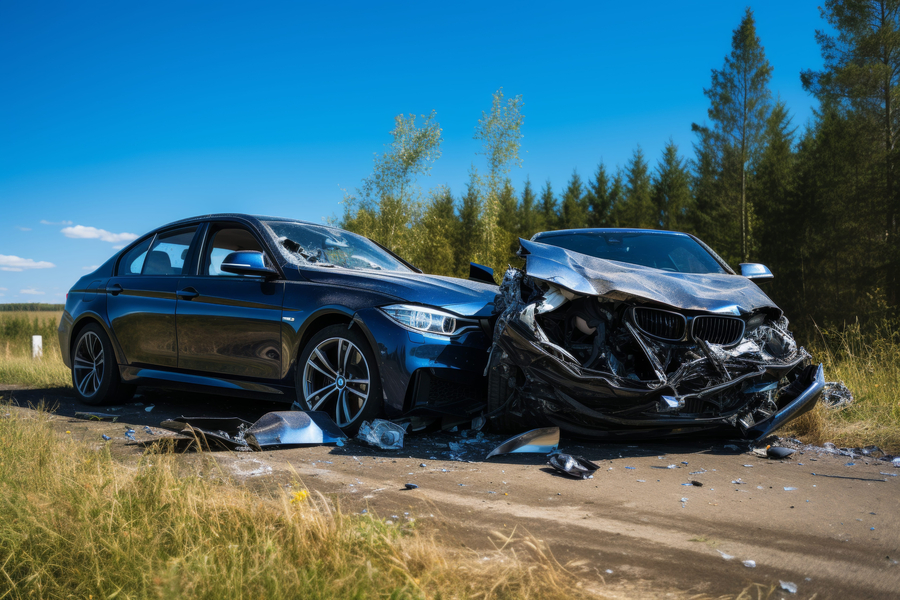
The location and angle of damage may help explain how the vehicles moved before impact. For example, damage to the front of an oncoming vehicle and the side of a turning vehicle may be consistent with a vehicle crossing its path. But those damage patterns do not, by themselves, establish who was at fault. A turning vehicle may have nearly completed its turn, or the other driver may have changed lanes or failed to stop. The physical evidence needs to be interpreted in context.
Investigators may look at the final resting positions of the vehicles, debris, tire marks, lane markings, and damage height and direction. They may compare that information with statements from the drivers and witnesses. Modern vehicles may also store certain data about speed, braking, or vehicle operation, depending on the vehicle and the circumstances. Access and availability vary, and any data should be collected and interpreted appropriately.
Witnesses and Other Evidence After a Cape Coral Crash
Independent witnesses can be helpful when drivers remember the signal or sequence differently. A witness may have seen a turn arrow, noticed a vehicle approaching quickly, or observed a driver enter the intersection. Their perspective, location, attention, and ability to see the relevant events all affect how much weight their account may carry.
Other evidence may include:
- Photographs of the vehicles, intersection, traffic lights, lane markings, and any visible obstructions.
- Dashcam footage or video from nearby homes and businesses.
- Police reports and diagrams, along with follow-up investigation records where available.
- Medical records documenting injuries and treatment after the collision.
- Vehicle inspection findings, repair estimates, and applicable electronic data.
- Statements from passengers, pedestrians, and other people who saw the crash.
Evidence can become unavailable as time passes. Video may be overwritten, vehicles may be repaired, and witnesses may become difficult to locate. If it is safe to do so, preserve photographs, contact information, and any relevant communications. Avoid editing or deleting original video files, and keep copies in a secure location.
Shared Fault and Florida’s Comparative Negligence Rules
Fault is not always all-or-nothing. Depending on the evidence, more than one driver may have contributed to a collision. A left-turning driver may have failed to yield, while an oncoming driver may also have been speeding or distracted. The legal effect of shared responsibility depends on the facts and the applicable law.
Florida’s modified comparative negligence statute generally reduces a claimant’s recoverable damages by their percentage of fault. Under the current rule, a party found to be more than 50 percent at fault is generally barred from recovering damages in a negligence action, subject to the statute’s scope and any applicable exceptions. Because fault allocation and damages can involve complex legal and factual questions, an early insurance assessment is not necessarily the final word.
Insurers may evaluate statements, photographs, reports, and medical information when deciding how to handle a claim. Their conclusions may differ from one another, particularly if the evidence does not clearly establish the signal phase or vehicle speeds. A careful review can help distinguish assumptions from facts supported by reliable evidence.
Practical Steps After a Left-Turn Collision
After a left-turn accident in Cape Coral, prioritize safety and medical care. Call emergency services when anyone is injured or the scene presents a danger. Follow medical advice and keep records of treatment, prescriptions, symptoms, and missed work. Some injuries are not immediately apparent, so seek prompt medical evaluation if you develop pain or other concerning symptoms.
When circumstances permit, consider these steps:
- Exchange required contact, license, insurance, and vehicle information with the other driver.
- Photograph the scene, vehicle positions, damage, signals, road conditions, and visible sight-line obstructions.
- Get names and contact details for witnesses, without pressuring them about what to say.
- Make a factual note of your recollection, including your direction of travel, signal, lane, and approximate timing.
- Keep receipts, repair documents, medical records, and communications related to the crash.
- Be cautious about making assumptions or giving a detailed recorded statement before you understand what information is being requested.
Do not put yourself in traffic or another unsafe situation to collect evidence. The police report can be useful, but it may not contain every detail or settle legal responsibility. Preserve your own materials and ask how to obtain the report and any available supplemental records.
When Legal Guidance May Help
Questions about a turn arrow, blocked sight line, disputed speed, or shared fault can make a claim difficult to evaluate. A Cape Coral car accident lawyer may be able to review the available evidence, explain how Florida law applies to the circumstances, and communicate with insurers on a person’s behalf. Whether that assistance is useful depends on the individual situation, including the severity of injuries and the complexity of the fault dispute.
At Ralph Sanchez Law, we understand that a left-turn crash is not explained by a single rule or a single photograph. A review may require comparing signal evidence, sight lines, speed, impact points, witness accounts, and medical documentation. If you are unsure how those details affect a potential claim, consider getting advice specific to your circumstances before making important decisions.
Right of Way Depends on the Full Picture
In a Cape Coral left-turn crash, the turning driver usually must yield to oncoming traffic close enough to present an immediate hazard, unless a signal or other rule changes the movement. Still, the right-of-way question cannot always be answered by looking at the turn alone. Signal timing, vehicle speed, visibility, impact evidence, and each driver’s conduct may all influence how responsibility is assessed.
Clear documentation can help preserve the facts while they are still available. When accounts conflict, reliable evidence—not just an assumption about who “had the light”—is often central to understanding what happened and how the law may apply.
Were you injured in a disputed left-turn crash? Contact Ralph Sanchez Law to discuss the circumstances of your accident and the available evidence.