
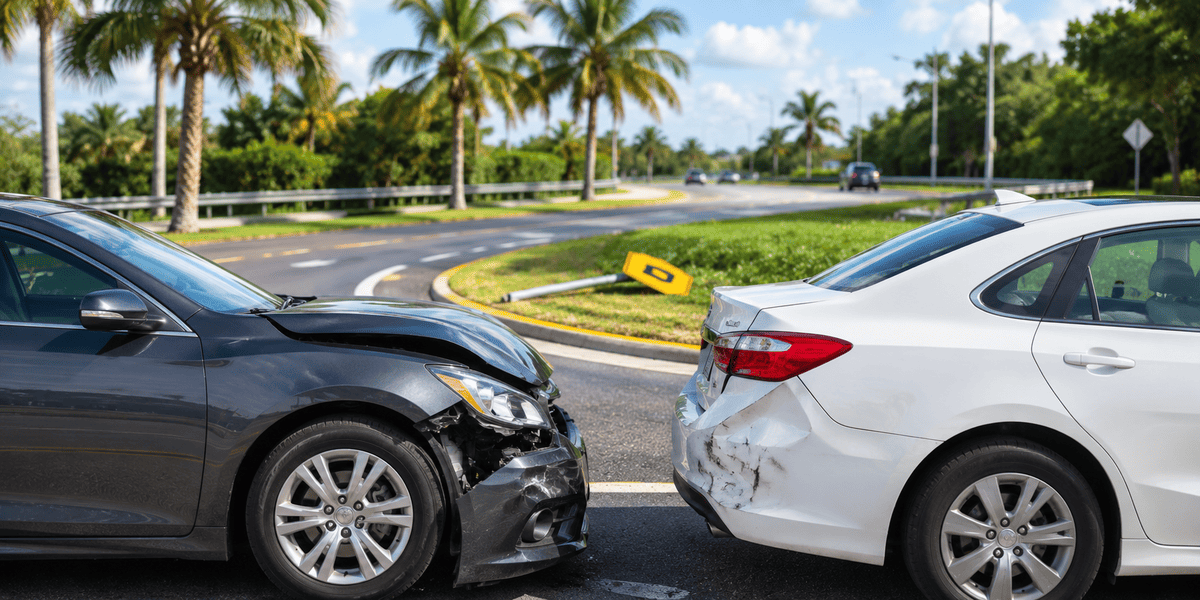
Florida Car Accident Claims Involving Dangerous Road Design or Missing Signs
A car accident is not always caused by driver behavior alone. After a dangerous road design accident in Florida, factors such as missing signs, limited sight distance, confusing lane configurations, deteriorated pavement, or inadequate maintenance may also need to be investigated. Ralph Sanchez Law can review the crash circumstances, roadway evidence, and available records to help identify the parties and conditions that may have contributed.
Claims involving roadway hazards can raise difficult questions: Who was responsible for the road? Was the danger known, or should it have been discovered? Did the condition contribute to the collision? And does a government agency have special legal protections or notice requirements? At Ralph Sanchez Law, we understand why a thorough investigation matters when a crash may involve both driver conduct and roadway responsibility. This guide explains key issues that can affect a Florida car accident claim.
How Road Design or Missing Signs Can Contribute to a Crash
Roads should give people the ability to travel safely. That does not mean every crash proves a road was negligently designed or maintained. It does mean that roadway features deserve attention when they may have concealed a hazard, caused confusion, or prevented a driver from responding in time.
Examples of potentially hazardous roadway conditions
- Missing, damaged, or obscured signs: A missing stop sign or a sign hidden by vegetation may leave approaching drivers without an important warning.
- Inadequate sight distance: A curve, hill, building, or overgrown landscaping may prevent drivers from seeing an intersection, stopped traffic, or another vehicle soon enough.
- Confusing road layouts: Poorly marked lane shifts, unusual merges, or inconsistent intersection design may lead to sudden braking or unsafe turns.
- Faded or unclear markings: Worn lane lines, missing turn arrows, and confusing pavement markings can make it difficult to understand where vehicles should travel.
- Maintenance problems: Potholes, standing water, damaged barriers, or deteriorated pavement may affect a driver’s ability to control a vehicle.
- Inadequate warnings: A sharp curve, work zone, or other unusual condition may require a warning that is missing or difficult to see.
For example, imagine a driver approaching an intersection where a stop sign is missing. A second driver enters from a side road, and the vehicles collide. The crash may involve the actions of both drivers, but investigators should also ask whether the sign was supposed to be there, who had responsibility for it, and how long it had been absent. A missing traffic sign crash does not automatically establish government liability; responsibility depends on who controlled the sign, what duties applied, and the facts surrounding the missing or obscured warning.
Who May Be Responsible for a Dangerous Roadway?
Roadway responsibility depends on where the hazard is located and who has authority over that area. A road may be managed by a city, county, state agency, or another public entity. Private property owners or contractors may also have responsibilities in certain circumstances, such as when construction work or landscaping affects a road or sightline.
More than one party may need to be considered. A public agency might have responsibility for a sign or road maintenance, while a contractor may have performed work near the site. A driver may also have contributed by speeding, failing to keep a proper lookout, or disregarding a warning. Identifying potential roadway responsibility does not eliminate the need to examine driver conduct; it expands the investigation to include all plausible causes.
Why identifying the right entity matters
Different agencies may control different parts of the same route. One entity may maintain the road surface, while another is responsible for traffic signals or signs. The agency responsible for a nearby intersection may not be the entity responsible for the road segment where the crash occurred. Property boundaries, maintenance agreements, and work contracts can further complicate the picture.
In a dangerous road design accident in Florida investigation, identifying the responsible party early can help preserve useful evidence and clarify which legal rules may apply. Maps, road ownership records, work orders, and agency maintenance agreements can help establish who had control over the relevant feature.
Design Problems, Maintenance Failures, and Driver Negligence
Roadway claims can involve different types of roadway issues. A design issue concerns the way a road or intersection was planned or built. A maintenance issue concerns the condition of the road or traffic-control equipment over time. A sign may have been improperly placed from the outset, or it may have been correctly installed and later damaged, removed, or obscured.
Design and maintenance claims can involve different evidence and different sovereign-immunity issues. For instance, a claim about a confusing intersection design may require analysis of plans, engineering standards, traffic patterns, and the location’s history. A claim about a broken signal may depend more heavily on inspection logs, repair requests, and how long the signal was out of service.
Driver conduct is still relevant. A roadway hazard does not necessarily excuse careless driving. Investigators may consider speed, distraction, visibility, weather, braking, and whether a driver had a reasonable opportunity to avoid the collision. Florida uses a modified comparative negligence system. Depending on the facts and applicable law, a person found more than 50 percent responsible for their own harm may be barred from recovering damages, and a lower percentage of fault can reduce a recovery. The specific outcome depends on the evidence and the rules that apply to the claim.
Evidence That Can Help Explain What Happened
Roadway conditions can change quickly after a collision. A missing sign may be replaced, vegetation may be trimmed, or temporary repairs may alter the scene. Photographs and records gathered promptly can help document what drivers encountered at the time of the crash.
Photographs, video, and scene documentation
When it is safe to do so, photographs can document the road from several directions, including the view available to approaching drivers. Images may show sign placement, sight obstructions, lane markings, lighting, pavement damage, skid marks, and nearby landmarks. Dashcam recordings, traffic-camera footage, and nearby business video may also help establish how the collision occurred. Video is often overwritten, so prompt preservation requests may be important.
Scene documentation should capture context, not just close-ups. A photograph of a missing sign may be more useful when it also shows the intersection, the direction of travel, and the driver’s approach. Measurements, maps, and professional scene analysis may help clarify distances and sightlines.
Maintenance records and prior complaints
Maintenance records may show when an agency inspected the area, received a complaint, repaired a sign, or learned about a hazard. Work orders, inspection logs, service requests, and communications can help establish the timeline. These records may help establish when the condition was reported, inspected, repaired, or otherwise brought to the responsible entity’s attention.
Prior crashes near the same location may also be relevant, particularly if they involved a similar hazard or pattern. A history of collisions does not, by itself, establish liability. However, it can provide context about whether a design or visibility issue was recurring and whether additional warnings or changes had been considered. The circumstances of each prior crash should be examined carefully rather than treated as proof of the current claim.
Witnesses and expert review
Witnesses may describe what they saw, whether signs were visible, or whether the road was difficult to navigate before the collision. An engineer or other qualified professional may evaluate sight distance, sign placement, traffic control, road geometry, or the relationship between the hazard and the crash. Expert analysis should be based on documented evidence, including the scene, applicable plans, and available records.
Government Claims and Important Deadlines
When a public agency may be responsible, additional procedural rules can apply. Florida law provides limited waivers of sovereign immunity, with requirements that may affect notice, timing, and available damages. A claim may require written notice to the appropriate agency and the Florida Department of Financial Services, as well as compliance with statutory waiting periods and filing deadlines. The details can depend on the type of claim and the parties involved.
Government-related claims can involve notice requirements and deadlines that differ from an ordinary negligence claim. Different time limits may apply to claims against government entities, and missing a required notice or filing deadline can affect the ability to pursue the claim. The applicable period may also depend on when the claim accrued and the specific facts. Speaking with a qualified lawyer early can help identify the entities involved and determine what steps may be necessary to preserve a claim.
Government records may also be subject to specific request procedures, and some evidence—especially video—may not be retained for long. Prompt investigation can help locate the right records and document the roadway before conditions change.
How Roadway Responsibility Can Affect a Car Accident Claim
If evidence suggests a road hazard contributed to a collision, the claim may involve more than the drivers’ insurance policies. Investigators may need to assess which parties had control over the road, whether a dangerous condition existed, how long it was present, and whether reasonable steps could have reduced the risk. They must also connect the condition to the crash and the injuries claimed.
That causal link is important. A missing sign may be concerning, but a claim still needs evidence showing how the absence affected the events. A road defect might have played no role if the collision would have happened regardless. Conversely, a hazard can be significant even if a driver also made a mistake. The goal is to build a clear account of how the roadway and the actions of each person contributed.
A Florida car accident attorney can help assess potential parties, preserve evidence, review available records, and explain how comparative fault or government-claim rules may affect the case. The investigation should be based on the specific road and crash rather than relying on assumptions about who must be responsible.
Practical Steps After a Crash Involving a Road Hazard
- Prioritize safety and medical care. Call for emergency help when needed and follow medical advice. Keep records of treatment and related expenses.
- Report the collision. Provide accurate information to law enforcement and obtain the crash report when available.
- Document the roadway if safe. Photograph the scene, signs, markings, sightlines, damage, and relevant directions of travel.
- Preserve potential evidence. Save dashcam footage and contact details for witnesses. Note nearby cameras that may have captured the incident.
- Avoid speculation. Describe what you observed, but avoid guessing about who was responsible or making assumptions about the legal cause.
- Seek guidance promptly. Early advice can help identify deadlines, responsible entities, and evidence that may need to be requested quickly.
Looking Beyond the Collision
A crash involving dangerous design or missing signs requires more than a quick look at the damaged vehicles. The road’s layout, visibility, maintenance history, prior incidents, and agency responsibilities may all help explain what happened. At the same time, a roadway condition must be connected to the collision, and each driver’s conduct remains part of the analysis.
When the circumstances suggest that a road hazard may have contributed, careful documentation and timely investigation can make a meaningful difference. Ralph Sanchez Law encourages people facing these questions to learn how the facts, applicable deadlines, and potential parties fit together before deciding what steps to take.
Reach out to Ralph Sanchez Law to discuss the accident, available roadway evidence, and whether responsibility may extend beyond the drivers involved.